Chapter 4
The Renewal Programme may have been expanding in its numbers and its concepts – but so was the community at Harold Road. They were already being stretched for accommodation beyond that currently suitable and available, so while the Renewal Programme was strategically and long-term planning, we needed to start to think laterally and rather more quickly. Obviously, the main area open to the Community for expansion, which they had found that they now needed after just one year in operation, in Autumn 1975, was right on our doorstep.
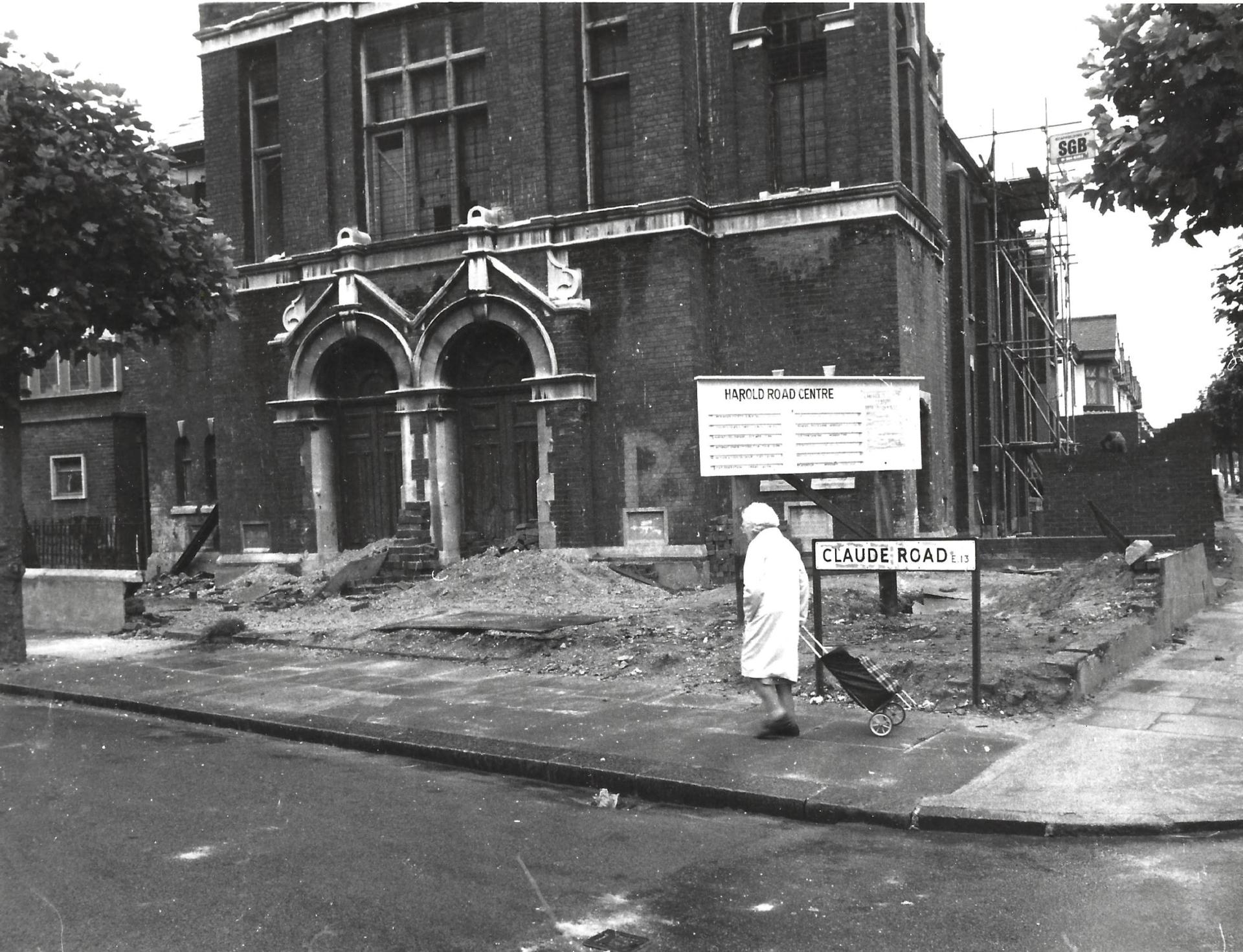
It was not to be in the upstairs rooms over the hall and anyway they seemed to be the right place for the Renewal Programme, but we did need to bite the bullet and look seriously at the main adjoining church building. It was no longer regarded as a safe place and an earlier survey had revealed structural damage which we knew we could not do ourselves. But we also needed to pray that we got it right. Praying AND planning is a good strategy. It is a bit like turning vision into strategy - but we had to gain a vision first as to what was needed particularly for the immediate future.
Exploring the Possibilities
While the Renewal Programme were happily moving forward with their plans for their new Headquarters in the upstairs rooms over the hall, members of the House Committee also eagerly spent time going through the derelict church space and dreaming dreams which we believed could be fulfilled if it should ever be brought back into a usable condition. They drew sketches and consulted each of the groups who were currently using the hall to further define their own needs and possibly those of others who might want to join us in the future,
Most of the current groups were growing to appreciate the hall they had grown used to, but the Mother and Toddlers felt they would prefer to have a more dedicated room where they could leave out larger equipment. All the groups expressed a wish for more storage rooms and of course more and better toilet facilities, and it was also felt that having more than one entrance, so that their meetings would not be interrupted when people wanted to go through to other rooms, would be ideal.
Although the height and galleries could lend itself to two levels we did not go that way immediately and a case was easily made for eventually using the derelict unused space next door to provide 2 more large conference/activity first floor rooms, 2 chapel /worship areas on the ground floor, 4 storage rooms in different parts of the building, a craft room and a workshop area for training young people, possibly 3 coffee points, a committee room and a larger reception area as well as, of course more, and better toilet facilities. The greatest underlying barrier appeared to be the money we would need to convert this unsafe and derelict space into a useful and welcoming area for the local people.
Raising the Funds
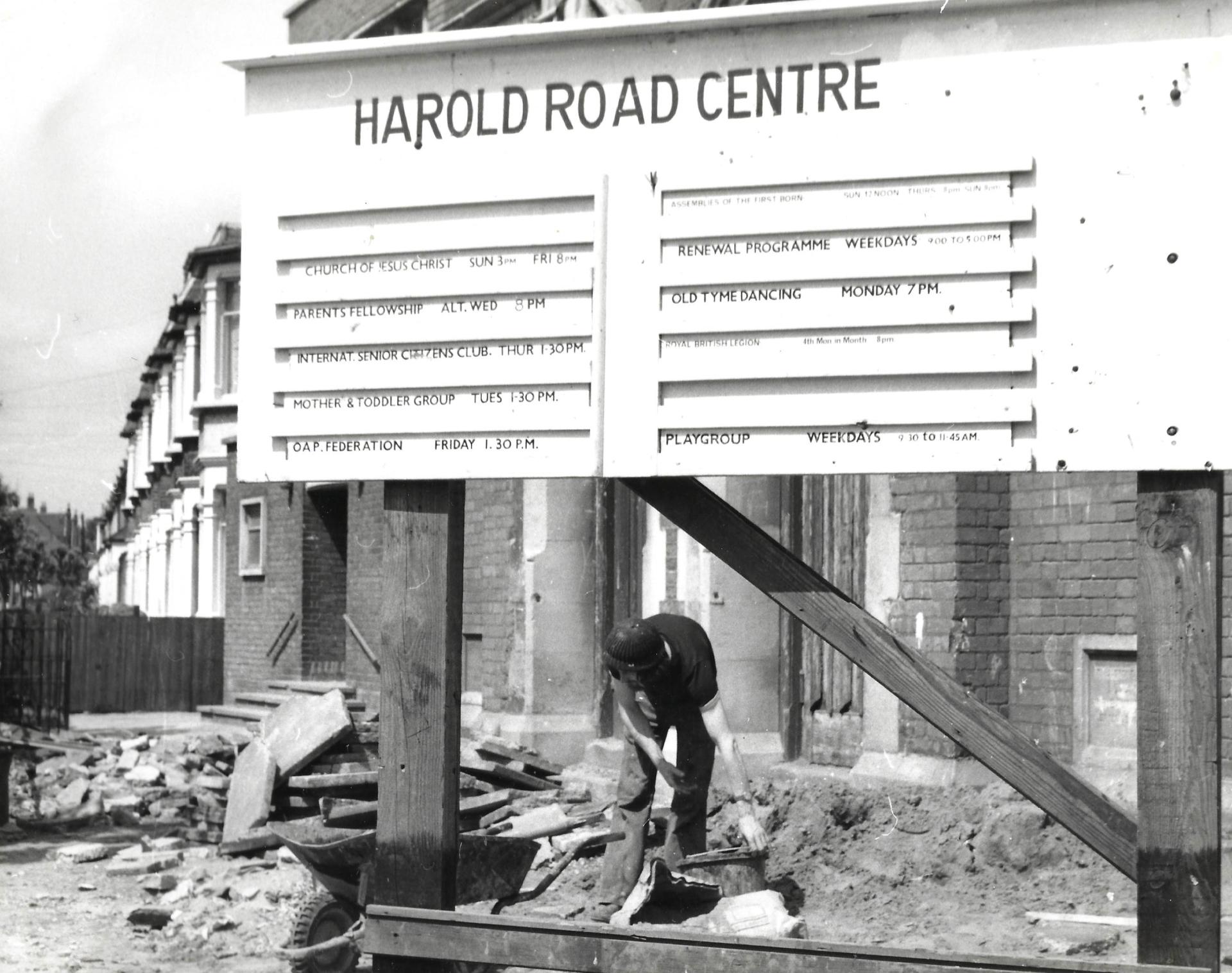
Although there was a real willingness to do any of the practical work required on a volunteer basis themselves as many of the locals were artisans, we knew that whatever we wanted to do we would need materials and some skilled labour and specialised equipment – so we could not do all that was needed without money. In fact, considerably more than was currently coming in to maintain the existing halls in use. We also had to start earmarking funds for the much larger repair work and redevelopment. We started by holding special events both for developing the community involvement as well as for fund raising.
We were already using all our able-bodied members of our own team to maintain the existing buildings1 and improving them where possible using volunteers who were now all part of the community. By this time the wider community included links with members of churches like St Luke’s in Sevenoaks from outside the borough, as well as more recently being able to call in groups from local secondary schools. They would all come in for workdays to help decorate and clear parts of the buildings, some of those links from the more affluent were able to help with specific needs and advice, but not many locals had the professional skills which we needed to carry out the more specialised work that we knew would be needed in the future.
The number of Suppers, events and local Jumble Sales increased, often supplying community and personal needs and even heirlooms, which meant coping with dealers2 attempting to be first in the queues before the doors opened so they could siphon off anything that was of value. I also found a good market and good homes for some of the old pews from the church with Chelsea pubs which also helped clear more space. We built up special links with churches and their communities who partnered with us making our development their special concern and held concerts and special events and Bazaars to support us.
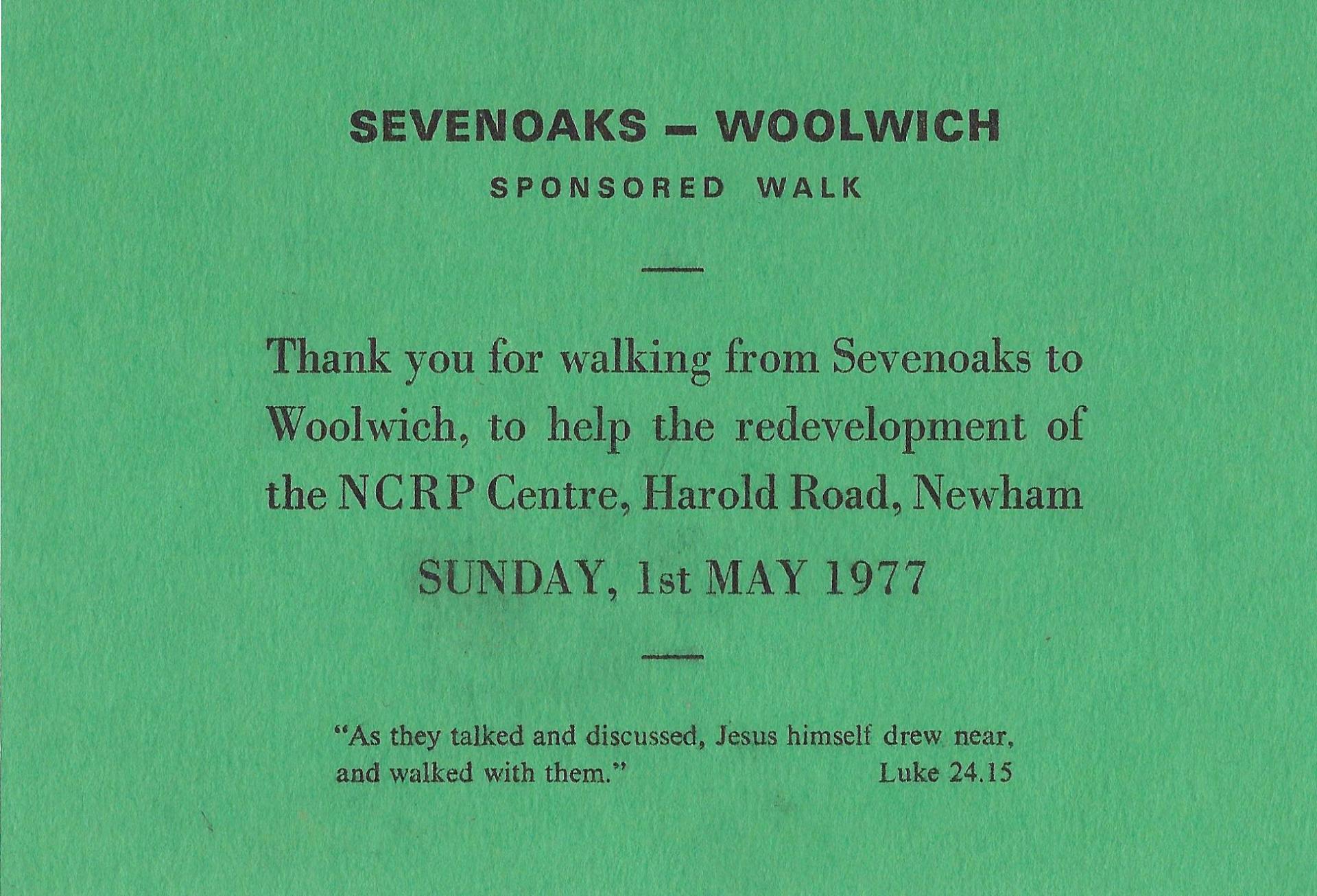
There were two particular churches I remember vividly who raised funds to send to us by organising sponsored walks – Thundersley Congregational Church led by their Pastor Gordon Bates, held one walk from their church to the pier in Southend on Sea, and St Lukes Sevenoaks, whose pastor was the Rural Dean, John Hargreaves on 1 May nearing the end of the project, held an even longer one, all on footpaths from their church across the Woolwich Ferry to St George’s on Burford Road where the Bishop of Barking greeted them and entertained them well, along with many from our own centre who joined in – many friendships were formed. These gave us a kind of confidence that the Lord was with us,
Drawing Up Plans
We moved on in faith and had drawn up amateur plans to give the growing work at Harold Road an even brighter future and a hope. We brought a surveyor on site to see what structural damage had been done in the derelict unused church building and to see if it was possible to resurrect any of these premises in a different format. We were relieved to find that the main building was pronounced sound and the whole roof was not condemned as we had originally feared. There was just one section that would need considerable work, but we were assured that if we were willing to spend on it, everything could be possible. Of course, we had no money in the budget, but this did not hinder us from sketching out our own plans for the construction of as much as was possible of our dreams.
The plans were being sketched up in such a way that we might be able to tackle a small part at a time and gradually we wanted to start to consider commissioning fuller architectural drawings to put more detailed plans into practice, although we had not quite got to that stage. We began by looking at accessing space in the gallery at the first-floor level in the church where there was a strong useful balcony on three sides, although we knew we could never afford the cost of making a full first floor by spanning across from the two side galleries.
The Organ Loft Space
Looking at the building and different levels in this way, area by area revealed a possible area on the first floor at gallery-level that would open up easily to provide accessible and significant space, and it appeared to be comparatively simple and one that we could manage without bringing in much professional help. It could be a project in itself, and the successful reclamation of this space would give us a good-sized room on the first floor independent of other areas as well as a large storage area and we were sure it would eventually provide us with dedicated space for a playgroup.
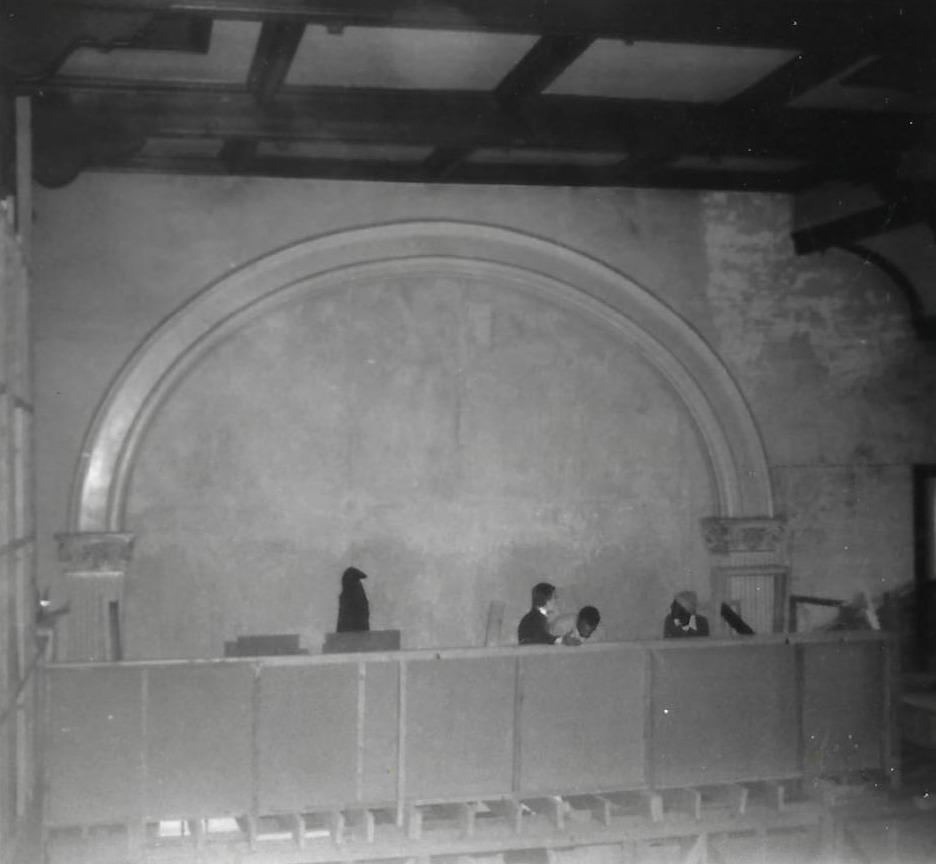
This meant clearing the space behind the pulpit currently occupied by a broken organ and large pipes. The conversion of this organ loft would then give us a clear space that could be used for such activities as the playgroup. This was felt to be the simplest piece of work and one we should tackle first. Everyone unanimously agreed with this suggestion, and we took steps to set this transformation in motion.
Removing the Organ
First of all, we had to remove the derelict broken organ with its great pipes. This we found was something we could not, after all, tackle ourselves. But then we thought laterally - that others might be interested in this old musical instrument with its huge pipes and there might even be some income which could help with materials and other costs. We had a number of organ builders come to look at the instrument and all of them shook their heads, until we found one who, for sentimental reasons, agreed that he would dismantle it and take it away, while retaining some parts that were still usable which included being able to actually renovate sections of the old organ for use in others which could cover his costs.
Putting Plans into Practice
We were convinced that once the severely damaged organ was out of the way it would give us a sizeable space which we could prepare ourselves. It could then be enclosed on the church side with a full height new wall which would be two useable good sized extra rooms for the play group - one with windows and natural light and a storage room. Even the new wall construction was something that we felt we could do ourselves with our own local volunteer labour.
We did not at that time, though, have any bricklayers to build the wall, but we did have craftsmen and electricians, labourers and plasterers. Our relationships with the local CRU (Community Relations Unit) of the Probation Service were very good and they agreed to undertake the construction of the main new wall. They also took on the levelling off of the floor for us. They would oversee it, taking responsibility for the specialised labour, using men who had agreed to undertake community service orders as an alternative to prison. This was, of course, all provided that we could provide the materials.
This arrangement meant that the other work would need to be done at weekends or evenings and by a variety of different people. The first stage of our great redevelopment was by now well underway. The provision of the bricks and plaster and also the timber and nails and lino and heating appliances, and the installation of new electrical points by our own labourers, all went ahead using our existing funds set aside for this purpose, but we soon drained our small redevelopment fund.
We had eventually completed the work – and reasonably quickly for this relatively small area. Then we realised just how long and how slow a job the whole development was going to be – and how costly. But we were thrilled with the extra room and storage room extending into a different part of the premises that we had gained, and the usefulness of the Centre was increasing.
Arch Revealed
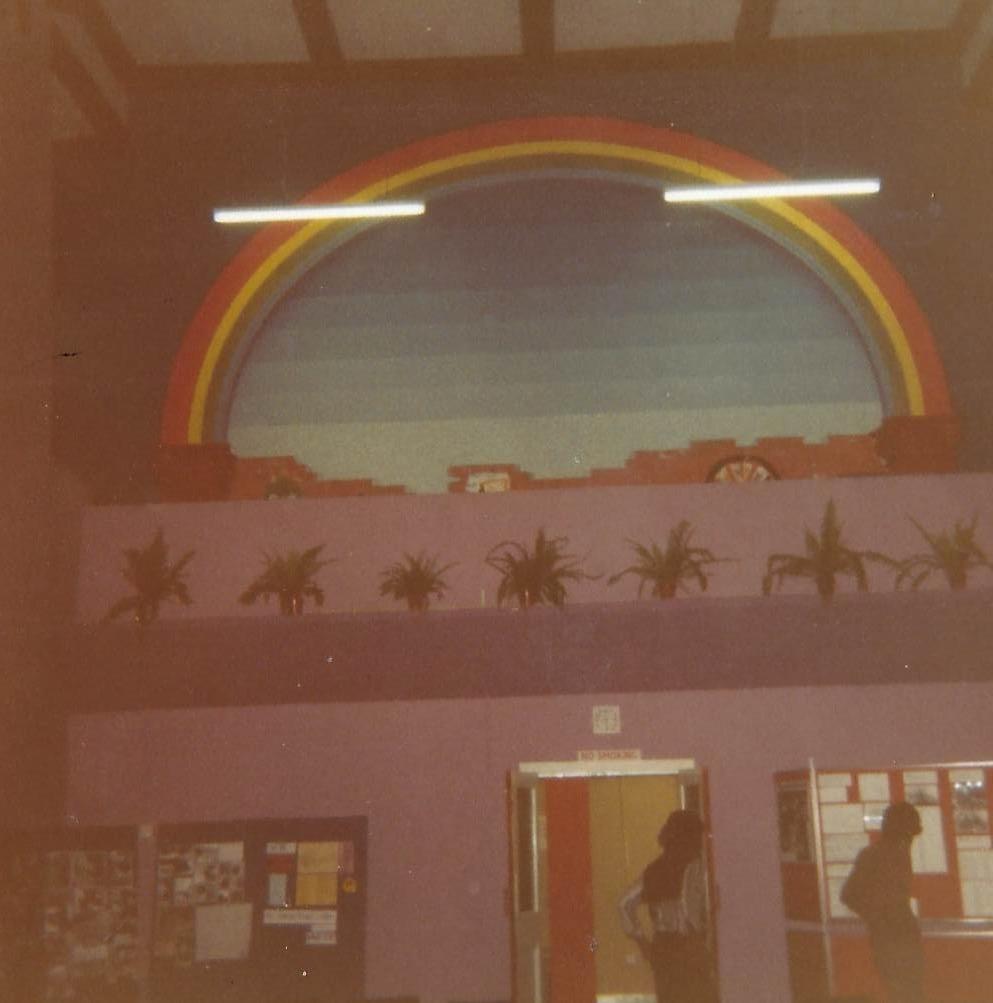
With the removal of the organ pipes, a large, splendid arch had been revealed between the church and the expanse to the rear of the building where the organ had been. We felt it could be an iconic feature and eventually the arch was painted into a glorious rainbow shining over the centre demonstrating the glory of the Lord in the steps that had been taken.
All those involved in the reclamation so far had signed their names on the new space side of this wall and left messages of good will – some drawing pictures to illustrate this and members of the community users rejoiced as well by adding their names and good wishes.
Rejoicing in Early Successes
Then the following year when we held an Open Day with the Mayor in July 1976 in order to display the longer-term plans and to show off this newest resource now being used for such a different purpose, we provided aprons, paint and crayons and gained more signatures, donations, support and involvement in this way; many of whom had come through curiosity and for different reasons, but many people signed, left donations and returned to participate in completing the decorations and joining in where they could.
Advice Centre starts at HR
One of the earliest positive responses following the Open Day mid 1976 was the Council basing Evening Advice Centre linked with the Renewal Programme and based in the first of the hastily prepared upstairs rooms over the Hall before they took full occupation.
What Next?
This one extra room plus extra storage had given the burgeoning local community fresh hope and confidence. By their own efforts in just their second year they had brought back into use the organ loft – and they were also learning how to belong to a larger neighbourhood group and to care for and support each other.
They all recognised that we had made a start – but was it enough? It had certainly given the community fresh hope and was proving a popular room even though we could improve it even more, but the community now had the bit between their teeth. More space was obviously needed, and we had to have faith for this to happen in God’s timing. But what more could be done in other areas while we waited?
TCW Role - Stimulating by Coordination and Enabling
The short-term residential community workers in training was working well and they were being seconded by the Renewal Programme to receive practical experience in working from specific centres as well as creating community in undeveloped areas. They often carried unattached community roles and responsibilities but were specifically there to coordinate and enable local people although they were often able to use their own gifts too. Both Dave and Harry (‘H’) demonstrated this on our specific building needs and Greg with his research and the Asian community. When Jon had completed his year and moved on, Greg then came back in to take responsibility for working with the community during the period when further specific expansion and building repairs and restoration would be taking place on the derelict church building alongside.
The Harold Road Herald
While we were all planning for the bigger picture, Greg continued to keep the community fully informed and happy with the way everything was developing. He stimulated them to develop their own centre communication system with a typed and lithographed home-produced newsletter. This attracted some payments for local adverts to pay for it each time, and also took numbers of subscribers to run off copies with some to spare and the Harold Road Herald was born. Everything was done in-house and members were encouraged to share reports of their activities with each other. Greg was a creative thinker and a committed editor - It started small – but soon developed with the support of the centre members.
First Significant Outing
The links that had been forged with churches outside the area had helped build up a partnership in which each valued the links the other could bring.
Not only had members of St Luke’s Anglican Church in Sevenoaks helped the whole project amazingly by visiting regularly and becoming involved, but they also wanted to entertain their new friends on their home territory. They suggested that the community hire a coach and visit them to spend a day in Sevenoaks.
A coach outing was soon planned and filled with members of the Centre who were keen to have a day out in leafy Kent but then some began to ask what they should take as a gift to their hosts. Always when St Luke’s members from the suburbs had come to them, they had brought with them gifts and many in the planned coach party felt they could not go empty handed.
But what would their hosts really appreciate? What was the unique thing they had as a community to offer which St Lukes, in their detached middle-class houses did not already have? We found the answer in an unexpected link. We knew when they came, they had been giving extra help and attention to the Asian community and helping them integrate and the wider Harold Road community were all getting used to, and enjoying, the new tastes of the Indian cuisine at their united events. It was this section of the community who were the ones who either offered, or were asked to create, a gift to take with them – and they too became an integral part of this coach visit.
The gift was greatly appreciated, and the Asian ladies were even encouraged to give personal cooking and recipe lessons to their hosts. The day itself was also a great success and everyone was treated like royalty, and it looked like becoming an annual occurrence, This marked another major turning point in the struggle for equality – this was no longer to be a one-way process – this became a two-way process which was rewarding for everyone.
Identification - the Centre Logo
The community also began to think of their identity and image and a number of different competitions were held. The main one in which a large number took part was to design a new logo to appear outside on the new noticeboard giving an image of the purpose of the Centre. By the closing date a number of unique ideas had been submitted. Lynne Marshall’s pencil drawing was the one that had the approval of everyone and agreed was the best and most symbolic being an international globe held in a safe pair of hands. Everyone had embraced the international community element which was intended also to represent a safe place.
At the same time various members offered designs for the backcloth for the new planned chapel area which were all considered as the three Christian churches were also hoping for a distinctive design when they too received new premises. They chose the one that had a lovely display of light radiating from a central cross with mirror images which could be expanded, emphasising the outreach concept. This would be held as a wish for a time when a more permanent area could be restored.
[1] Greg remembers spending several Saturdays painting various bits including the railings with the "help" of teams of offenders supervised by Probation service.
[2] I remember being called into settle quite belligerent disputes between rivalling dealers who all wanted preferential treatment.