Chapter 3
The Harold Road development as a Christian Community Centre in its own right was healthily seen as both a separate division but also as part of the Renewal Programme. This allowed the other aspects of the NCRP to flourish in their activities and departments throughout the borough. Additionally, there was already developing a growing close working relationship between the two.
It was now also becoming obvious that the rooms on the first floor had limited community use and were not as attractive to the local community as the large hall and other facilities on the ground floor. 1975/76 saw the Renewal Programme needing to enter a new phase in its own development and expansion. They had been actively involved establishing their foundations throughout the borough since 1969/70 and significant changes were taking place in their structures.
Change was always present, but there was also a danger of separate developments between the different departments if they became too associated with one particular venue when they were needed throughout the borough. The Renewal Programme began to think seriously about developing the upstairs rooms as a major identifiable Central Hub and a Resource Centre. This would also carry all the admin to enable both the detached community work, and all that was going on with the churches, to flourish. It would also give them a specific central point where they could, not only draw their own teams together with their wider resources but also provide one specific mailing address and even a specific location for their growing number of publications which would be a further unifying factor. Additionally, it would also be linked with an active community and provide good facilities where they could receive and entertain visitors travelling into the area from farther afield before taking them around the borough.
The willingness of the local community to take responsibility for the buildings was significant for the development of the Centre, building on its Christian roots. So, too, was the ease with which the Renewal Programme had been able to share the main hall for one of their earlier outside conferences. There they had been able to display a wider overview of their new programme activities, including introducing a ‘new’ medium which stimulated further possibilities and openings for future resources.
A ‘Win-Win’ Situation
From the point of view of the Community, there was a growing sense of security in the thought of having the Renewal Programme more permanently on site. They would be able to make a major contribution to the work of the Centre and more than earn their place as one of the users - without any of the responsibilities of buildings which would continue to be carried by the local community. More staff would be available to consult, it was expected that they would bring with them photocopying and printing equipment as well as typewriters and there could be the possibility of sharing admin responsibilities and even of having an on-site telephone number which could be used in an emergency. It was not anticipated that the Renewal Programme would need their telephone outside of office hours when many community groups met – and would be willing to share! In reality, as yet the NCRP did not have any of its own desks, equipment and office furniture, but the Centre would not need to, or be expected to, provide these – each of the groups was responsible for their own equipment - so in principle it seemed to everyone to be a win-win situation.
There were no regrets when the move of NCRP from Wakefield Street and other centres drawn together, was eventually achieved. The extra space that was being planned for use by the community was now of a different nature – see the next chapter: the upper rooms were not at that time much in demand and would have little use even as a temporary space, as by then even more plans were developing.
Preparing in Faith
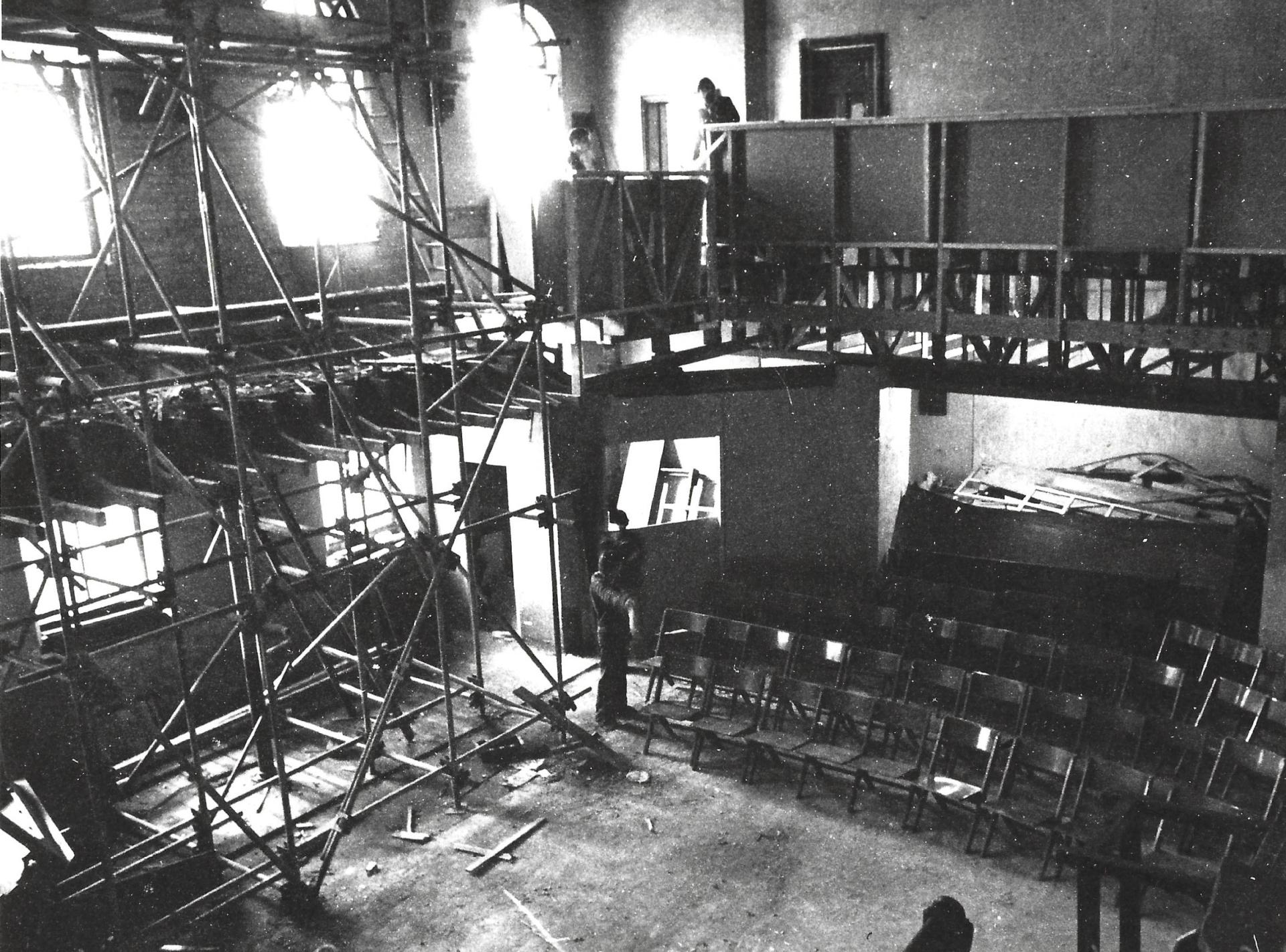
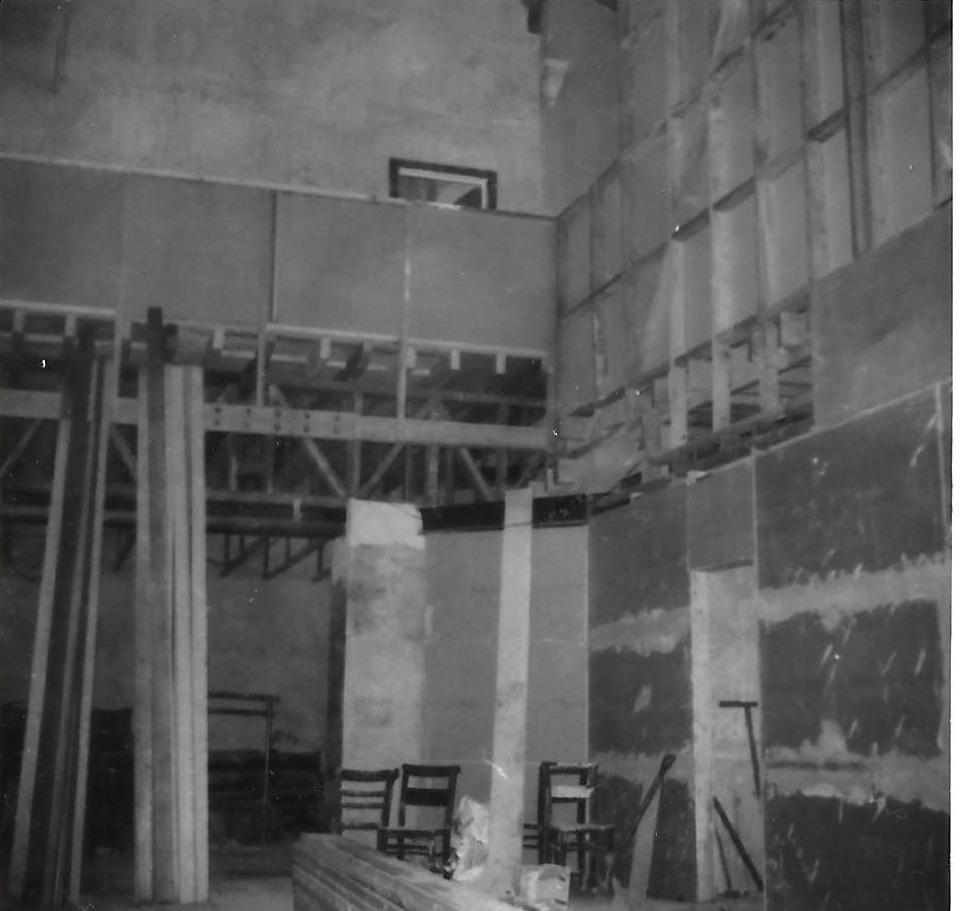
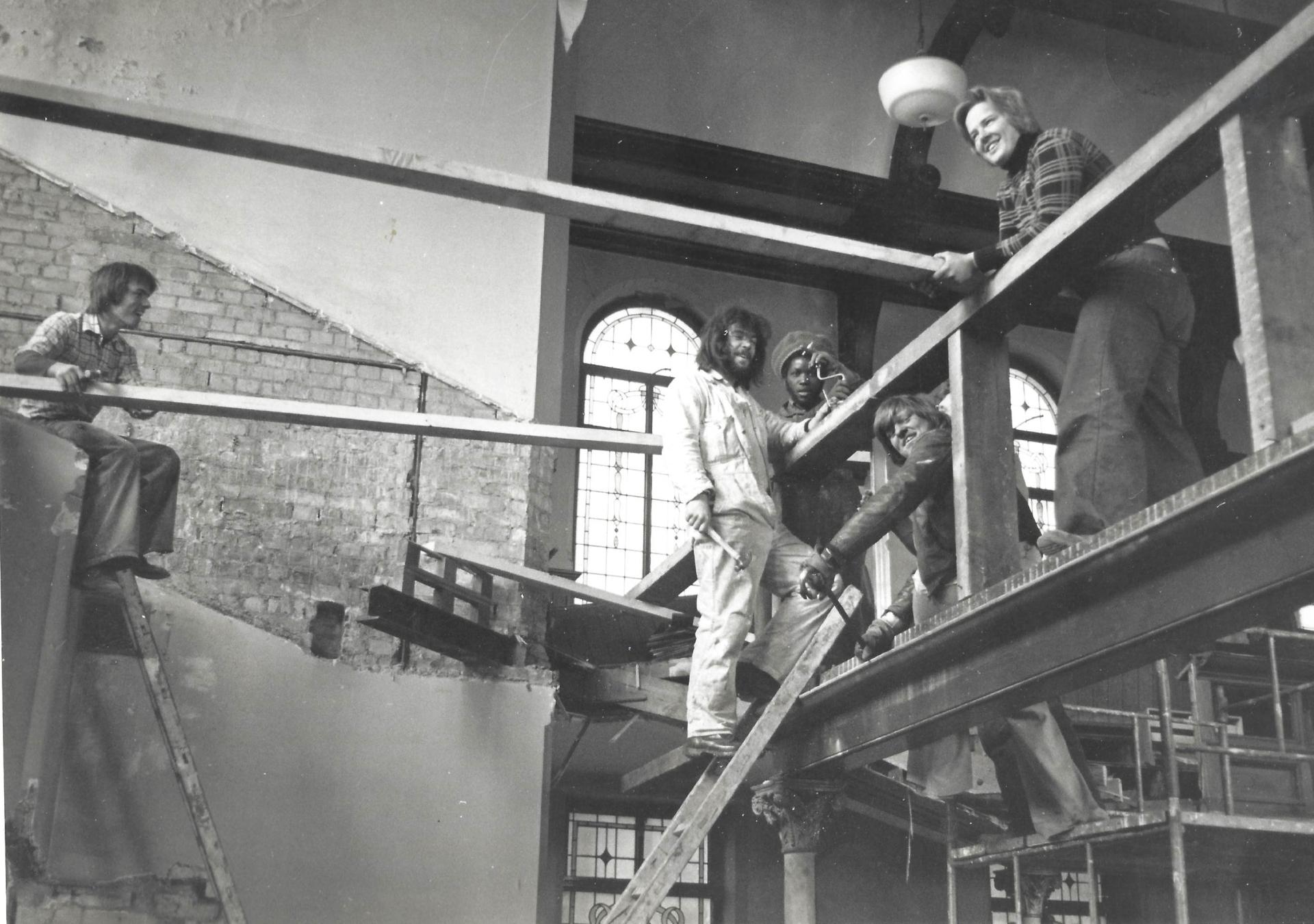
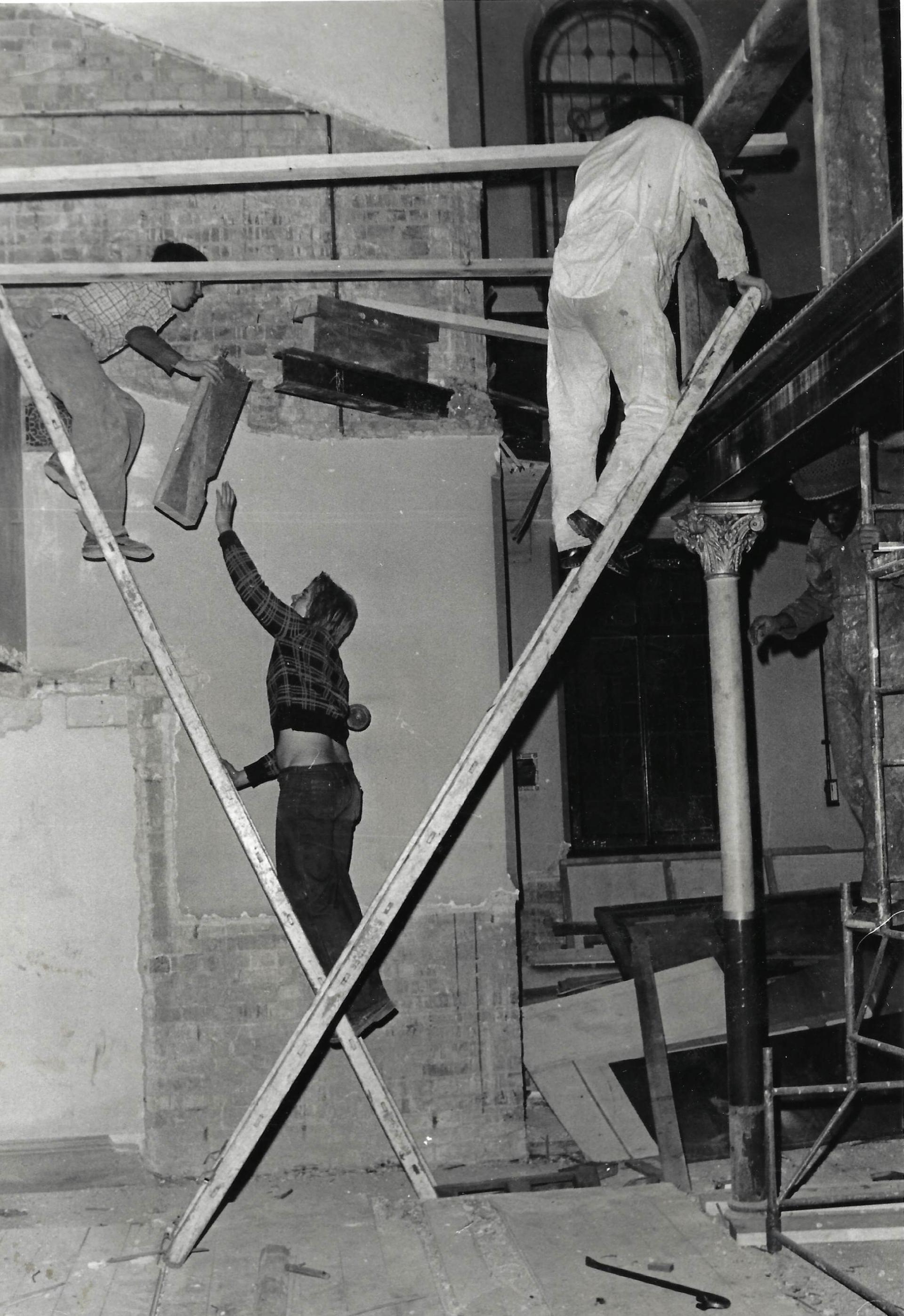
So, the clearing team of both volunteers from the Centre and from the wider group went to work to start to prepare the upstairs rooms for an entirely new NCRP Central office. Considerable thought was given to listing all that they ideally would need in their planning to bring everything together. The Renewal Programme recognised that they did not have very much equipment of their own except for large numbers of files, records and one or two typewriters. But everyone was very generous and friends from farther afield sent in their contributions all of which were either brought into use immediately so they could be brought with them or stored in the adjoining church building.
Furniture Provision
Then, just at the right time, we received news from Alf Wilmore, the Deputy Director of Finance, who had, in a voluntary capacity, been the Renewal Programme’s Honorary Treasurer from the beginning, that the Council’s Finance Department were relocating from their impressive premises in Stratford to join forces with another department, and their old site in Stratford was to be redeveloped Once the space was vacated and they had taken all they needed, they would be delighted for the Renewal Programme and the Harold Road Centre to have anything surplus to enable us all to expand.
This generous offer could take place at any time and at very short notice, so we had to be prepared to make decisions quickly. The offer included desks and filing cabinets as well as tea-making facilities and even an old photocopier as their technical functions were rapidly developing and upgrading (it was anyway becoming more economic in those days to hire these directly from the suppliers). Because of the work being carried out on the Centre, the offer was also extended to more practical building items and fittings – in fact anything that the Financial Department knew would need to be left behind!
I remember making the journey on an appointed morning with one or two others accompanied by a load of yellow stickers. This was some time before the Finance Department did actually move, when we were welcomed and got to know staff members and how their duplicate or unwanted machines worked, as well as individual quirks that some items of furniture might have had. The staff were keen to know that there was still going to be some continuing use for their cast-offs and showed a genuine interest in the project. We duly marked up anything we felt might be useful - thinking laterally – so this was rather dreaming dreams and reserving anything with potential use and in any way at all. I even remember marking up some wooden doors which we were sure would act as replacements in the Centre or come in useful at some time!
We were assured that when the Finance Department move actually did take place, those items we had stuck stickers on would all be dismantled and delivered – also free of charge. We just had to have space to take it into store for when we were ready to make our own move and put it into use. We knew that the old church building could provide this space, and we just needed to move things around a little so that the space we were creating would then be filled up even more for a short time. But this time it would be on a temporary basis with known needed items for the future.
This was just another piece of valuable teaching on God's provision which would stand us in good stead in the future. Sharing needs and cooperating with others would, more often than not, provide future win-win situations whereby all needs were reciprocally met.
The Move
In the end, with everyone working together, the overall planning came together very easily but the actual move of the Renewal Programme into their new home took place over a longer period than had been originally anticipated: It was, though, sufficiently installed to give the Harold Road address as its new headquarters in time for sending out the 1975 Annual Report in mid-1976.
NCRP Decisions to be made
Although there was no element of haste in the actual move as it was seen as a natural progression, it did take time as many structures had been changing significantly around this time. No longer was the Renewal Programme separately operating a series of different departments from different points in the borough. Also, the first two three-year original grants for West Indian and Asian work had come to an end and our initial staff had moved on, but an increasing number of those who had been involved since, had opted to continue by staying in the area and being involved in other ways.
Change of Staff and TCW Accommodation
Three new salaries were received at this time. Two of these had come from successful grant applications for an overall Administrator and also for a General Secretary. The Director, who had been without a salary for the past year, also at that time received a three-year grant from a totally unexpected source which had not been envisaged – the Home Office! Cliff was already carrying out lectures for them, teaching a mixture of inner-city urban sociology and race relations to senior police officers and prison governors. He had resigned as a university lecturer on health grounds following a severe bout of glandular fever due to overwork the previous year. The loss of this salary had not only had family repercussions but had also affected the Renewal Programme as in the five years he had held this University post, the salary had also been used to support other members in the work as well as other needs.
As far as future staffing was concerned a good start had been made. Each of these new grants was for an initial three-years, so plans would need to be made to both prove their viability and consolidate them in the days ahead.
It was also the time of year for four new Trainee Community Workers (Greg Smith, Chris Norton, Tesni Davies and John Widdowson) three of whom were from outside the borough to start training and also for making more permanent accommodation available for them too. Both 3 Winter Avenue and then the adjoining no 5 became more permanently available to the Renewal Programme at this time, both of which needed furnishing, and a shared living policy agreed, and it was not long before we needed the now vacant Ascension Vicarage in Dockland – before it too was developed.
Alan Partridge was our Administrator throughout this intense period of change and seeing the Renewal Programme through many other changes before, after two years, he himself moved on to more practical work with a group of local churches.
Other Changes
The old Management Committee of the Renewal Programme gave place to an Advisory Council and started meeting in the evenings when more people could attend. Canon Nigel Porter, who had been the Renewal Programme’s first Chairman and also a great support to the Trinity Centre which had been in his Parish, retired and moved to Chelmsford. Unfortunately, soon after his move, Nigel suffered a fatal accident on his bike and on the Tenth Anniversary of the Newham Community Renewal Programme in 1981, Cliff was invited back to give the first Nigel Porter Memorial Lecture on ‘The Churches Mission in the Inner City’.1
Rowland Joiner, working alongside Cliff at Wakefield Street United Methodist/Congregational Church succeeded Nigel as Chairman in 1978. An inter Church Support Group of National Representatives was formulated. Paul Regan, a local Methodist Minister who had initially been seconded on a half time basis to carry out youth work and especially evangelistic Youth Discos at both Wakefield Street and Trinity, was due to move on but then joined us on a full-time basis as Deputy Director.
Throughout all these changes Trinity had retained its independent operation. Soon after we had taken possession I had been joined by Kathryn Gosden, a young volunteer who, having been rejected by university to study mediaeval history, had come as a local intern to help at Trinity. Her excellent calligraphy was just what we needed for our logos and publications, and she rapidly discovered her unique gifting with children by establishing our first After-School Club at Trinity and running summer holiday clubs for all the churches. I was still keeping a watchful and supportive eye on developments at Trinity having left Kathryn in charge of everyday oversight, but further change was forthcoming there too. It was served by successive appointments of TCWs starting with Paul Wells in 1974, as it developed along similar but not identical lines.
Around this time too, Bruce Larson, a well-known Minister from Seattle on the West coast of the US, had shown an interest and brought a film crew over with him to make a programme for CNN, the News Programme, about the community work that we were doing, focussing particularly on Trinity. In the following year following Kathryn’s move more centrally to lead the NCRP Children’s Work Team (which she did successfully for many years), the Rev Charles Watson, originally a Church of North India minister, became Warden of Trinity following pioneering work locally among Asians with Ardil his Asian-born wife: during his time that particular church building doubled in the space being offered as it was structurally redesigned to have two floors!
Although Sebert Road had initially been handed to the West Indian Miracle Ministry team led by Pastor Harold McWhinney, I was drawn in to help them carry out outreach to the community through opening up a play group and Jane Belben and others started running Language classes for first-generation Asian women.
The Renewal Programme, alongside its on-going admin and training facilities, was now fast becoming a Resource agency. Not only did they coordinate a number of printed resources of pamphlets, papers and books but also started a video Lending Library with the Media Presentation of their work ‘The Hammers’ which had been piloted at Harold Road the previous year.
The Joint plans for the new development at Harold Road had included a request from both the Old Age Pensioners and the Youth Group for a Craft Centre and Workshop. The Renewal Programme was also particularly interested in being involved in using these so that it could offer pre-training courses in basic work skills for unemployed youth – as this was becoming an increasingly relevant issue.
Widening Work
It was an active time for all, and it was becoming very appropriate that the Renewal Programme should take up future residence and plan for a strong community base for their borough-wide work. The full vision was for the upstairs suite of offices with its four main rooms available which easily fell into four different uses. The separate main toilets with a very small quiet room for community and the use of all were at the top of the stairs leading up from the shared kitchen and the nearest small office rooms along the passage would become the reception and secretary’s office, then a room for Cliff as Director with the larger Community-workers room next door and the largest room at the end of the corridor became the meeting room where everyone would gather and in which visitors could eventually be entertained.
Support Agency
The Renewal Programme was by now becoming well-known as a support agency within the borough and had set up an emergency telephone service which anyone could use at any time. Many of the local ministers and others were on a list with their telephone numbers and the availability, of those who were prepared to respond quickly when and wherever they were needed. During the daytime those in the office handled each request and passed then on, and at other times, it was transferred so that others took it in turns to take the calls and pass on the requests.
One evening I was on telephone duty at home acting as the link person, when a desperate call came in from a lady who was suicidal. I calmed her down, talking to her while I took all the details and promised that someone would be with her to help her more if she could just hold on. None of those on my list were available, I did not see myself as a Counsellor, but time was running out: she lived just a few doors from Harold Road, I prayed hard and knew that I would need to go myself. She was a lonely lady who had just had very bad news. So I prayed with her and made arrangements to meet her the following morning at the Centre. I had made an everlasting friend, so much so that although she did get out and join in other groups, she would come in to see me if she knew I was in the office just to talk but often at the most inconvenient times. In the end I had to say that my time was limited and if she wanted to talk, she would need to help me, so she started addressing envelopes and filing. It was not long before she had made other friends particularly in the Christian groups, got her confidence up and found a role, first in our offices and then farther afield.
She was not the only one who would drop in to talk and discuss what was going on. We were also getting an increasing number of interested people from outside the borough – some of whom would become more involved in our own future in the days ahead. We were receiving invitations to share our experiences with them, so initially while the rooms were being prepared and furnished, the small ‘Quiet’ room at the top of the stairs had become both Cliff’s and my office space. But we were also attracting academic as well as practical placements from Colleges and Universities and it would not be long before we were running evening Urban Mission Courses in these new rooms. A united central base would prove to be an excellent step forward.
Personal Issues
Life was full. With my secondary teaching background and my experience of lecturing with the Institute of Bankers, I was taking my full share of these invitations to share these developing principles with others, and I not only found myself in demand for the odd lecture and some scheduled courses in Bible Colleges on ‘Understanding Communities’, but I also started eighteen months of giving half a day each week to the national YMCA College which included overseeing some practical aspects of their summer placements – extremely interesting giving me lots of material to share with others!
Additionally, as churches in other areas continued to decline and more buildings all over the country were closing their doors, my experience as an advisor to those who had the responsibility for bringing back to life redundant buildings, began to escalate nation-wide – sometimes involving me in some fascinating travel to meet people and view buildings for myself.
All of this was in addition to guiding Harold Road into a new era plus activities with the family and now increasingly on a wider national front. By 1976, our three children had each also reached major national examination years and we needed to make important decisions with them. Further, Cliff, having been involved in some Free Church denominational changes, was elected President for 1976-77 for the Congregational Federation which also meant much nation-wide travel 2. Then, because of our denominational Pilgrim Father roots this widened even more internationally, as it included the 200th Anniversary of the formation of the United States and we were out of the country for the summer months. Life was going to get even busier and more complicated before the end of the decade.