Chapter 2
Over the summer months of 1974, even before we actually signed anything, we had been able, with Mrs Fisher’s help, to contact and meet up with a number of the past users and discuss with them whether they were still interested and, if so, if they could help bring the premises back into a reasonable shape for the way forward - that is when it was all officially agreed.
Rev Paul Baker, the appointed leader of the Moravian section of the remnant church fellowship no longer meeting, who was now living some distance away caring for another Fellowship, was one of the first to talk to us and pledge his support. I knew that the Moravians were strong in Europe, and also strong in prayer and committed to the Reformation, but there were not many fellowships in the UK. When their building in Plashet Grove not far away, had fallen beyond repair the previous decade, only five years previously, the small remaining congregation had united with the remnant of the once large Methodist congregation and given it a limited new life for a short spell They were committed to both unity and to equality, so I knew this partnership should work well.
This was one of the major differences to the start of Trinity – here we could start with our principles clear – this was to be a Christian centre opening up for the people, but Trinity had also given us our experience of the opposite way to work – life was becoming even more exciting!
As well as the remnant church being drawn back, the Old Tyme Dancers, the Mother and Toddlers Club, and the Parents’ Fellowship (which had started as parents of the Sunday School children) also showed renewed and considerable interest in this new venture – and interestingly they had each originally been formed by part of the church fellowship meeting their social needs. Interest was shown by a number of individuals, and we explained the rather different principles on which this Christian Community Centre would need to be run in the future. There was no funding available other than any that they themselves could find or provide, and the leadership would all be volunteers just as we were. We hoped they would catch the vision and truly enable the centre to serve those in the area and perpetuate Christian principles.
House Committee
Almost immediately, as soon as agreement was confirmed in September, they wanted to come together using the ‘House Committee’ format, which had proved so successful at Trinity. They embraced the fact that this would still be first of all a Christian Community Centre, but that another main purpose would now be to bring people from the neighbourhood together so that they could all share in building a caring community and that it was intended also to be a place where people mattered.
In line with our ‘enabling’ and ‘empowering’ principles we stayed as advisors in the background and did not take a leadership role. Paul, as the senior pastor took the chair as expected for a while, but he soon found an opportunity to hand this role on to someone who lived more locally who also brought with him other gifts – one challenging potential change of mindset had now been made.
In such a community, people would not only be able to fulfil their own needs but also be able to help each other to overcome the loneliness that is so often felt in the big city. We emphasised that, because we believe that people's feelings and attitudes are important, we do not, and would not, tell them what to do, so each group would have full control over its own activities, but representatives from these groups using the centre would need to meet together every few weeks to agree and decide on its united policy and future plans. Sundays would be reserved for Christian groups to meet for worship and Saturdays for outside or united events.
Forward united planning would be needed, which would include activities ranging from special services to jumble sales (popular at that time) and annual summer fairs to open up and display their presence to others. The House Committee’s responsibilities would also include caring for and maintaining the Centre. We made it clear that we were only there to coordinate, advise and enable the local community to do its own thing but should there be problems, we would be there as a backstop working in the background.
Their immediate reaction to ‘no financial help’ was to start to use their own skills, discover those of others and put the buildings to rights so that the areas needed, could be brought into use as soon as possible, and they set it all in motion by calling together the first work party. This was one of the benefits of a poor working-class community - they had the skills but little money. We were not sure that they had ever been encouraged to do this before, although we did discover that between them they really did have all the skills, but had never been given any responsibility to exercise them.
Rallying Round
News soon spread, with a local leaflet-drop using the more able-bodied of those who had been involved in the past, but this was also helped somewhat by the local paper carrying a small, boxed slot with the news. The re-opening of Harold Road had created a great deal of local interest and goodwill. We were able to gather together local people into work parties, mostly of an evening, to do what was necessary - to clean up, to ensure that the plumbing and electricity and kitchen were all manageable - so that by mid-October in less than six weeks from taking possession, we had built up relationships and were able to hold our first united event.
Harvest Thanksgiving
We made this a Harvest Thanksgiving Service. The hall was packed!! Every available chair on the premises was brought in and still people were standing at the back. A local lady began the proceedings by calling out, “Come on now, put out yer fags, and let’s get started!” It was the most original call to worship we had ever heard, but it was highly effective and a few moments later the whole community was lustily singing, “All is safely gathered in, ere the winter storms begin!”
Our great adventure in community development had just turned another page. Children, young people, parents, and older folk all joined in an act of Praise and Thanksgiving that gave a great opportunity for introducing everybody to each other. The sharing of the vision for a Community Centre open to all and fulfilling local needs, also gave an opportunity for sharing a word from the Bible which Cliff, as the Director of NCRP, gladly gave.
Harvest Supper
A spirit of new life had been injected into the centre and it did not stop with just one event. A few days later a Harvest Supper meal took place which covered its own costs and made a little towards the cost of the utilities and the other things that were needed. The groups started to meet and consider more ways in which they could work together. They no longer saw themselves as hiring a Hall just for their own activities, but each began to recognise that they were all part of a centre which belonged to them all.
House Committee Expansion
For a community where those involved had been used to being told what to do and who were not used to making decisions and planning action, particularly with and on behalf of others, they caught the vision remarkably quickly. They saw it as a way of serving and they then wanted others to be involved in this way too. Once a few had caught the vision of these premises being their own responsibility, not just for themselves but also for others, they took to it like a duck to water. This spirit of cooperation spread rapidly as they recognised each other’s gifts, and various committees and small planning groups began to spring up.
They took their share of responsibility in small doses – but working with others, all for the good of the centre, which meant that it was not long before we had five sub-groups for Publicity, Administration, Pastoral Support, Maintenance and Social and United Activities each with a clear policy on who would take responsibility for planning, and carrying through, most of that which was, or would be, necessary. They each reported to the House Committee which now dropped to meeting bi-monthly and only occasionally more often – they trusted each other and wanted the best for all.
We had noticed this increased sense of ownership quite spectacularly before at Trinity. There, when we had given greater responsibility to the young people in their use of the premises, we no longer had a problem in protecting the buildings. They also expected others to respect their property and especially when outsiders came along to their meetings. They expected them to respect the rules they had created which were often much harsher than any we would have been able to make. The result was that we had little or no vandalism following the formation of the Youth Club who became the guardians of the building and worked well with the other groups.
In a similar manner, it was at Harold Road, with one of these subgroups - the Policy Group – where the following three basic requirements were laid down for all future users which were agreed by all existing users whether outwardly Christian groups or not – ‘There will be no violence, no gambling and no swearing on the premises’ and these became founding principles accepted by any new groups requesting use.
Groups Start to Meet
Former groups who had already expressed their desire to return, had first claim on the days and times that were available for the one main hall which, by this time, had been brought back into use. Mrs Fisher continued to hold the keys and let the groups in so that they could set up and organise meetings to fulfil communal needs and be responsible for their own equipment. The Playgroup was re-formed by willing mothers which was soon opened for local mothers to bring their under 5s each weekday from 9.30 to 11.45. The whole of Sunday also filled up very quickly in those latter months in 1974. Paul, with the Moravian link to the remnant church fellowship, restarted a morning service every week with an evening service just once a month and two other West Indian Fellowships, who had until then been meeting in homes, shared the remaining time each Sunday, but each of these groups also asked for a fellowship slot during the week. Potential name problems did not materialise in spite of their leaders each being called Pastor Reid (although unrelated) Pastor A N Reid led the Church of Jesus Christ, and Pastor C A Reid led the Assemblies of the First Born.
The House Committee started meeting upstairs having sufficiently cleared the nearest meeting room on that level. They got to know each of the groups and their needs and also agreed the new proposals and they had worked out how much it would cost to run the whole centre for heating and electricity and they asked each group to make their financial contribution accordingly. Interestingly they each usually gave more and only occasionally less and if they ever did give less, it would only ever be for a short period. Just as initially in the Renewal Programme, I helped by keeping the books and opened a special Bank account as soon as it was needed.
Widening the Use
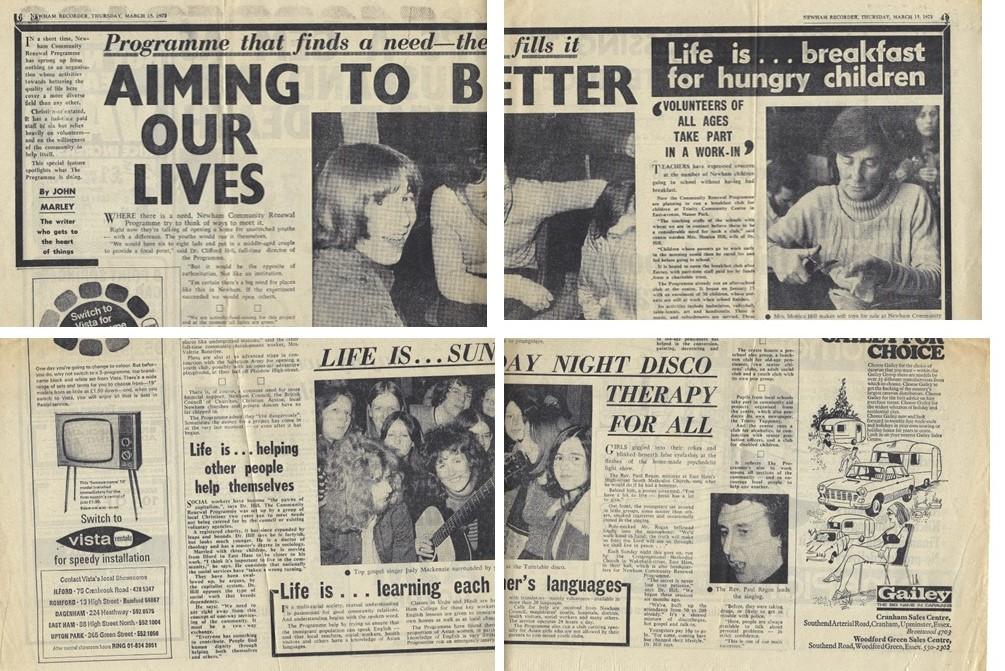
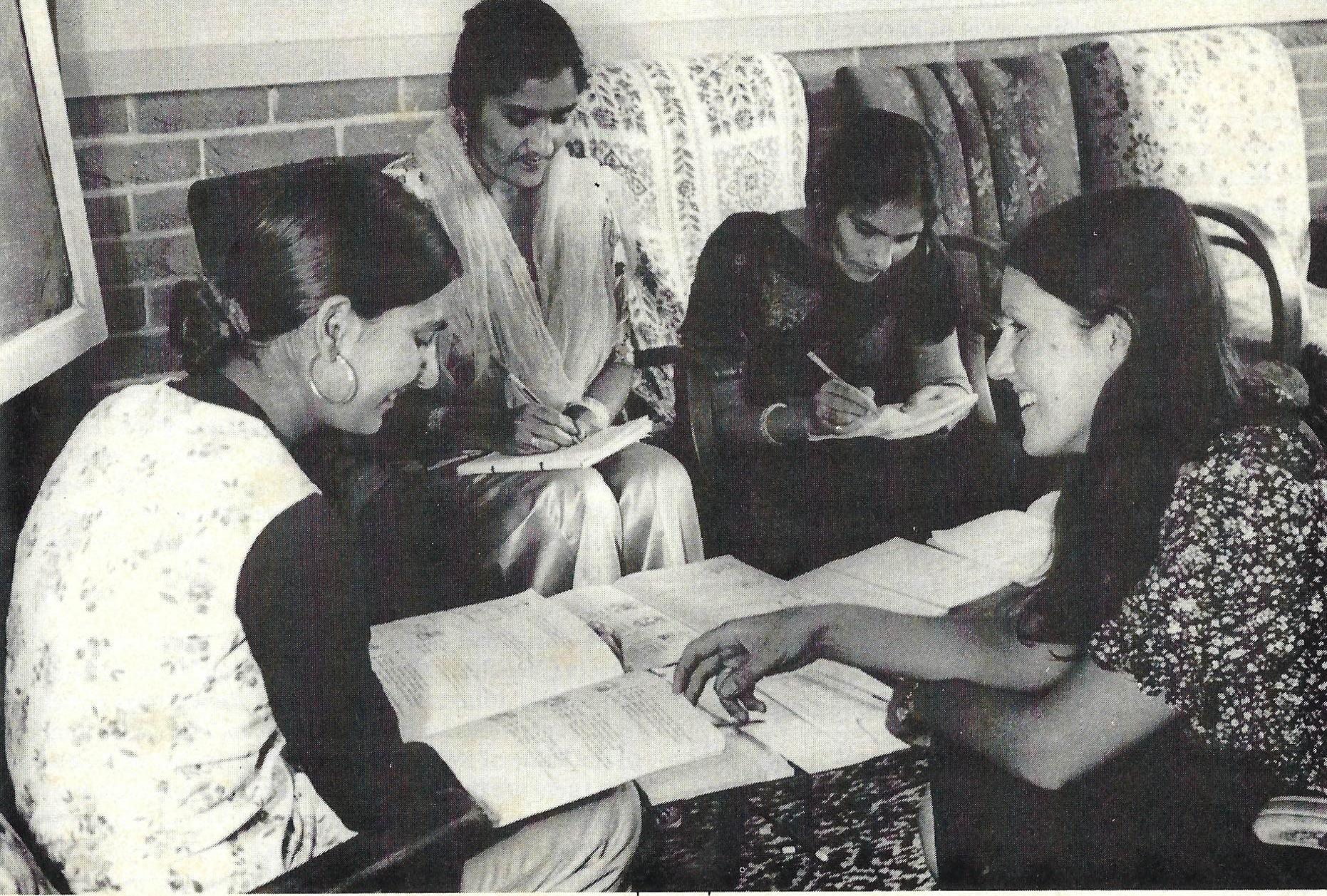
Once the groups had settled in and were beginning to feel it was their ‘home’, they began to look around to see if there were other needs which could be covered in the remaining available timetable slots – and this would be particularly to encourage new people settling into the area. The Renewal Programme had asked for permission to use the cleared upstairs room on Wednesday mornings for an English Language Class for Asian women, which they arranged as part of their outreach.
It wasn't long before an international branch of the OAPs who were meeting on a Friday afternoon also arranged for a social worker to meet with those who came to be known as the Asian Old Men's Club who also began to meet separately on Thursday afternoons when they could speak their home language – their initial dependency on the Renewal Programme and others to help with language translation was recognised as a special case. This was soon followed by an early evening meeting of the Newham Claimants Union who felt it worthwhile to offer their open services in the Centre for a season,
Most groups met weekly although we did have a monthly evening meeting of the Royal British Legion who also preferred the upstairs room.
Still Learning!
In the months following, the DIY Maintenance Group met regularly to continue to examine the building regularly, and do what they could, to make them more useful, with whatever they could find. I remember personally an occasion which was a salutary reminder that this was not a middle-class community – just different. I had in my diary a note of a 7.00 pm work party which I wanted to drop in on – only to find that no-one had turned up, but I rather disappointedly remained on the premises having found other things to do, as I was adept at ‘multi-tasking’, I was just about to leave at 8.30 when they all swarmed in! A sports event had been scheduled for both radio and TV (when colour was in its infancy) - it was not that they had forgotten or were untrustworthy, but they had simply all been watching this before they came out! Word of mouth took precedence over the written word – long before the days of social media!
More Growth
Second hand shops were few and far between at this time, Bring and Buy was only just rising but in the run up to Christmas the first of many successful Jumble Sales had been held – with local contributions of unwanted items from community attendees’ homes but also well supplemented by no longer needed materials from the clear-out. It helped provide much needed funding for new materials and equipment to renovate and maintain the building. They too rapidly became a focal regular event which attracted large queues prior to the scheduled opening time and often causing problems with outside traders queue-jumping to snap up the best deals. Success can bring with it other problems!
Then Christmas celebrations were held in the hall at Harold Road, which was decorated appropriately, and the community joined in with the Annual Carol Service held in East Ham Town Hall organised by the NCRP, which by then was becoming a regular occurrence in the borough.
In January 1975 the Renewal Programme requested the use of Harold Road for hosting a national one-day conference organised by the Evangelical Race Relations Group in which they were able to participate fully with Cliff being one of the main contributors with a paper on ‘Mission in the Urban Jungle’. Significantly, this also enabled a visual first showing of a production made for them by a supporter, using his professional skills as a newspaper photographer. ‘The Hammers’ was a photographic exhibition of the area and demonstrating various areas of the NCRP work. This had significance for Harold Road in the future, particularly with the youth craftwork we were already envisaging which might become possible when we had more dedicated space.
The Renewal Programme was also co-operating with others to run evangelistic and outreach events – and some of these would be linked in with what was happening at Harold Road – involving the people as well as the premises.
By this time the Renewal Programme had also begun to think seriously about setting up a central hub and coordinating their administration on the first floor – not intending to take over the running of the centre but to become one of the users. But we will look more closely at this practicality in the next chapter.
We were holding various popular united activities in which all the different groups played a part. These diverse groups not only got to know each other, but they found themselves appreciating the different communities and the gifts they each had. I remember one early united Sunday service though, when we did run into problems. The children from the Mother and Toddlers group had just played their part in singing a chorus which was much appreciated, when the Assemblies of the First Born, a West Indian fellowship, followed this with a rendition of singing in tongues, which terrified some of the children, who needed to be comforted. Our first anniversary would be coming up in September 1975 which would be the most appropriate occasion for another joint service but it was recognised that a little diplomacy was needed before we would be able to hold another United Service!
Young People
A number of young people were also passing the centre daily as they were going home from school and they were noticing new activity - so it wasn't long before they too were becoming involved. Having visited the school ourselves, initially this was to be during school hours and with the encouragement and permission of the teaching staff. The Senior School headteacher was delighted to be able to arrange for some of their older students to be engaged in community service and to take time off during the school day to help in different ways at the Centre. This all helped in relationships and led to involvement in more new ventures as we went along - which they would also help us to create.
Building Up Outside Relationships
By this time, we had also built up quite a mailing list of those outside the area who were keen to know more, and a regular quarterly newsletter started to be sent out by the Renewal Programme called ‘News from Newham’. The response to this had been very positive and especially now we were able to link into a community with something different to share and interested parties began to visit, for many different reasons and with this, many different kinds of relationships were formed.
Forging Links
St Luke’s Church, Sevenoaks took the Harold Road Community and its Development under their wing as their special project very early on. Back in Sevenoaks they held bazaars and took collections, but they also visited us, and brought gifts. Some of them traced their roots to the area when their families had moved out in the ‘redemption and lift’ people movements in the previous century. They wanted to become involved and some built relationships across the geographical and social divides, and they came regularly to help in the practical work especially on the organ loft conversion in 1976 when practical and planning help was needed. Reciprocal links were built up and it was not long before invitations were springing up for those from the Centre, to visit them – which developed into an annual outing in later years.
Viability
The Centre was gradually becoming what we considered to be fully viable for immediate needs. It had had an excellent first full year of community involvement and participation although finding money for ‘beyond the run of the mill’ materials, and occasionally labour for things that we could not do ourselves, continued to be a great problem. We finished the first full year with just £40 in the bank – but like in Trinity’s first year, all our heating and lighting bills and other activity costs had been met by those who used them, and each provided their own equipment or arranged to share it with other members. By the time we had been occupying the buildings for two years, in September 1976, we were left with about £300. We had not been looking to make money – but just to ensure that we became self-sufficient - we were not making a profit to use for things other than improving the basic use of the existing hall.
People, though, contributed in more ways than with money to the running of the Centre. But, by the end of the second year, we still had a great deal more to modernise and update in the halls alongside the church, so we had to think about changing our priorities.
Additionally, our solitary hall was now being used to capacity - and if possible, we needed to bring some of the remaining space into use.
By this time, too, the Renewal Programme’s activities were expanding and increasingly the upstairs rooms were being seen as a focal point for their overall ministry - which was a blessing in terms of personnel which we will explore more in the next chapter - but we also needed to look at the incredible opportunities available to us in the 18th century church building next door if (and when) it was restored.