Chapter 1
Following some welcome pressure behind the scenes, the approach from the Poplar circuit of the Methodist Church to take over responsibility for their Upton Park church building in Harold Road in the western part of the recently formed borough of Newham, came during the early summer of 1974 when we were at the height of ministry in our first reopened community centre at Trinity in East Ham. Trinity had not long officially been fully in our possession, and we had to make numerous far-reaching decisions on whether, who, and how, we were to maintain and develop the fledgling centre.
We had already started widening the discussion on the way forward for Trinity and its future. We had applied for some financial support for specific projects there including one with Urban Aid to upgrade the building by replacing the uneven wooden main hall floor which, with its knots and holes, was making life very uncomfortable for some users. So alongside this and all the other activity and change at Trinity, we also immediately set about finding out all we could about this proposed new building and area: although it was only just over a mile away, we were aware that it would have unique possibilities. We recognised that this could be, and should be, different, and that what had worked well at Trinity might not necessarily work here but there would inevitably be underlying principles that could apply. We did not want to plant a replica - there was, and never could be, just one blueprint and we would be facing a variety of new and different challenges – and we were looking forward to it!!
The Challenge
Harold Road was in a fully residential area and the church building being offered was on a corner site on its junction with Claude Road. It was about 250 yards from any kind of public transport on the lower end of Green Street and it was a further half mile to gain access to Upton Park Station. You did not need to travel too much further south on this main thoroughfare to reach West Ham’s football ground in the Boleyn Stadium. The northern section of Green Street was rapidly becoming a major shopping area for the smaller but already rapidly burgeoning Asian community which Greg Smith, one of our interns, was already researching for the Renewal Programme and other groups.
Going the opposite way along Harold Road for a similar distance was a local secondary school, but there did not seem to be another church, or indeed any community facilities, in the immediate close vicinity. We all felt this property was in a strategic position and could meet the needs of a different kind of community. If handled rightly it would have great potential. So, we responded in the affirmative.
The message came back immediately that we could take a closer look at the buildings that were on offer, and we could collect the keys from Mrs Fisher who lived close by.
First Visit
I well remember the day when a little group of us from the NCRP (the Renewal Programme) visited the site, complete with a large bunch of keys from Mrs Fisher. She had been very welcoming and had obviously been the mainstay in the church fellowship. She was now well into her 70s, had been a stalwart in the church and a fount of local information with many links, and we were determined to visit her to talk and explore more later. Our immediate task was to inspect all the buildings on the site and either accept, or enter into negotiations with, the Methodist authorities as well as starting the process of learning more about the historic and area background and other local facilities.
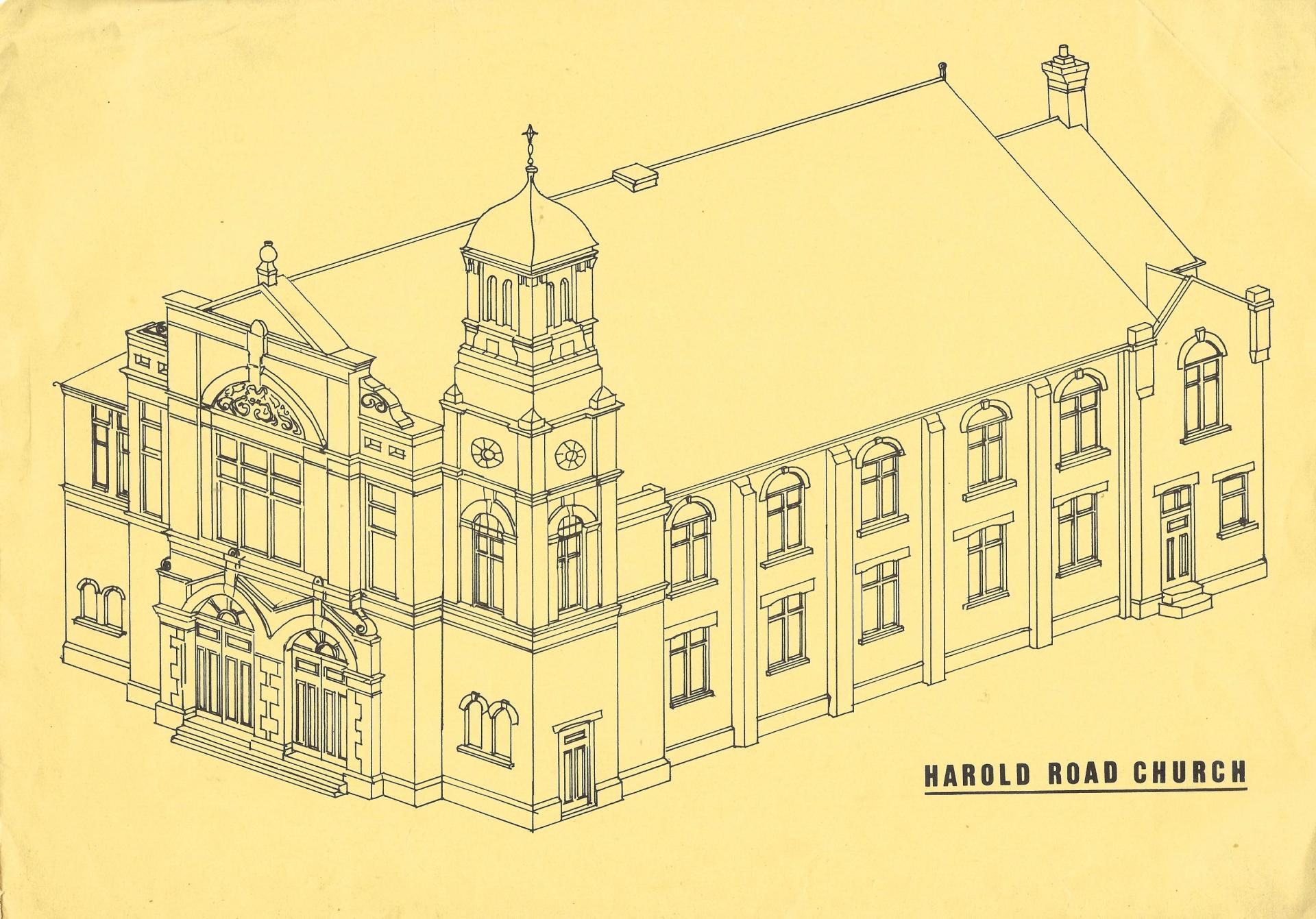
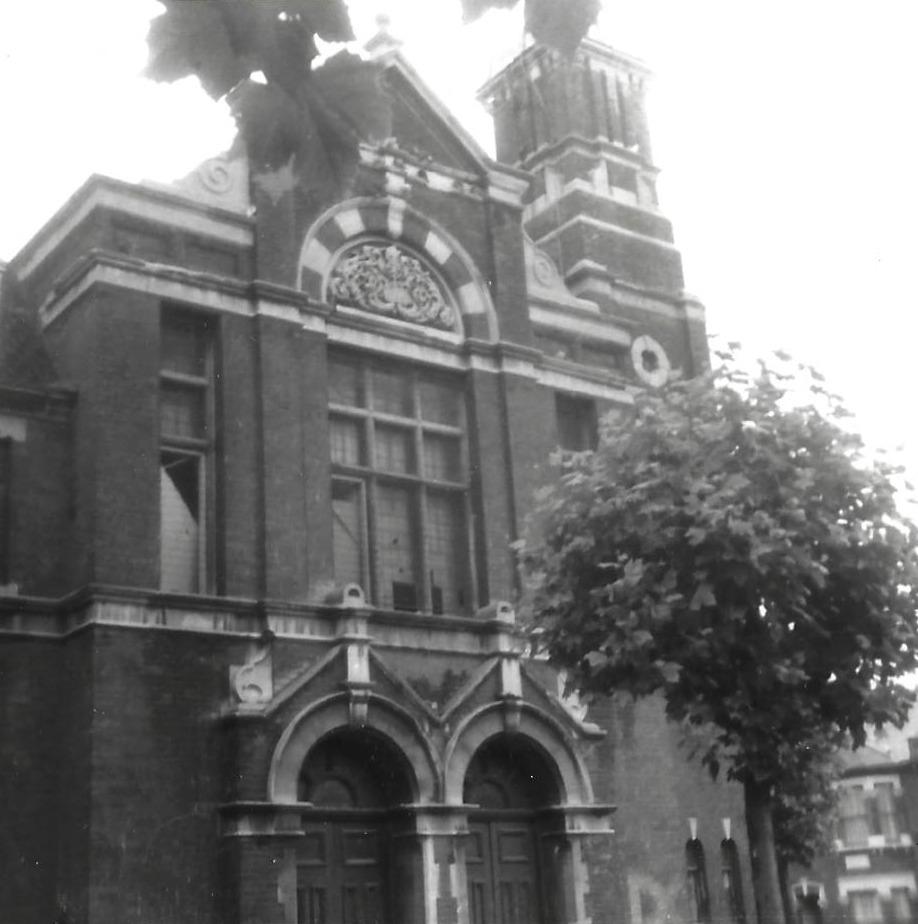
The premises were on this minor residential corner site and actually comprised two adjoining buildings covering the whole site and appeared to use up every inch of land right to within feet of the boundaries or building line. Limited on-street parking was the only option for cars. Alongside a 19th century impressive large non-conformist church building there was an adjoining hall that had been constructed much more recently (post war) obviously to serve fellowship needs. Although it had a well-used feeling, it had not only been recently vandalised but had obviously been lacking proper maintenance for some time and it needed a lot of repairs.
There were a couple of toilets on the inside of the porch to the hall which were in poor condition and adjoining this spacious hall with a stage, was a small but basically adequate kitchen and stairs to a second floor where there were more toilets and three or four larger rooms over the hall. These first-floor rooms also had possibilities, but three of them were extremely cluttered and obviously unused and neglected. After briefly inspecting what we could of these and seeing their potential, we returned to the ground floor to see what else would be involved in the larger church building alongside.
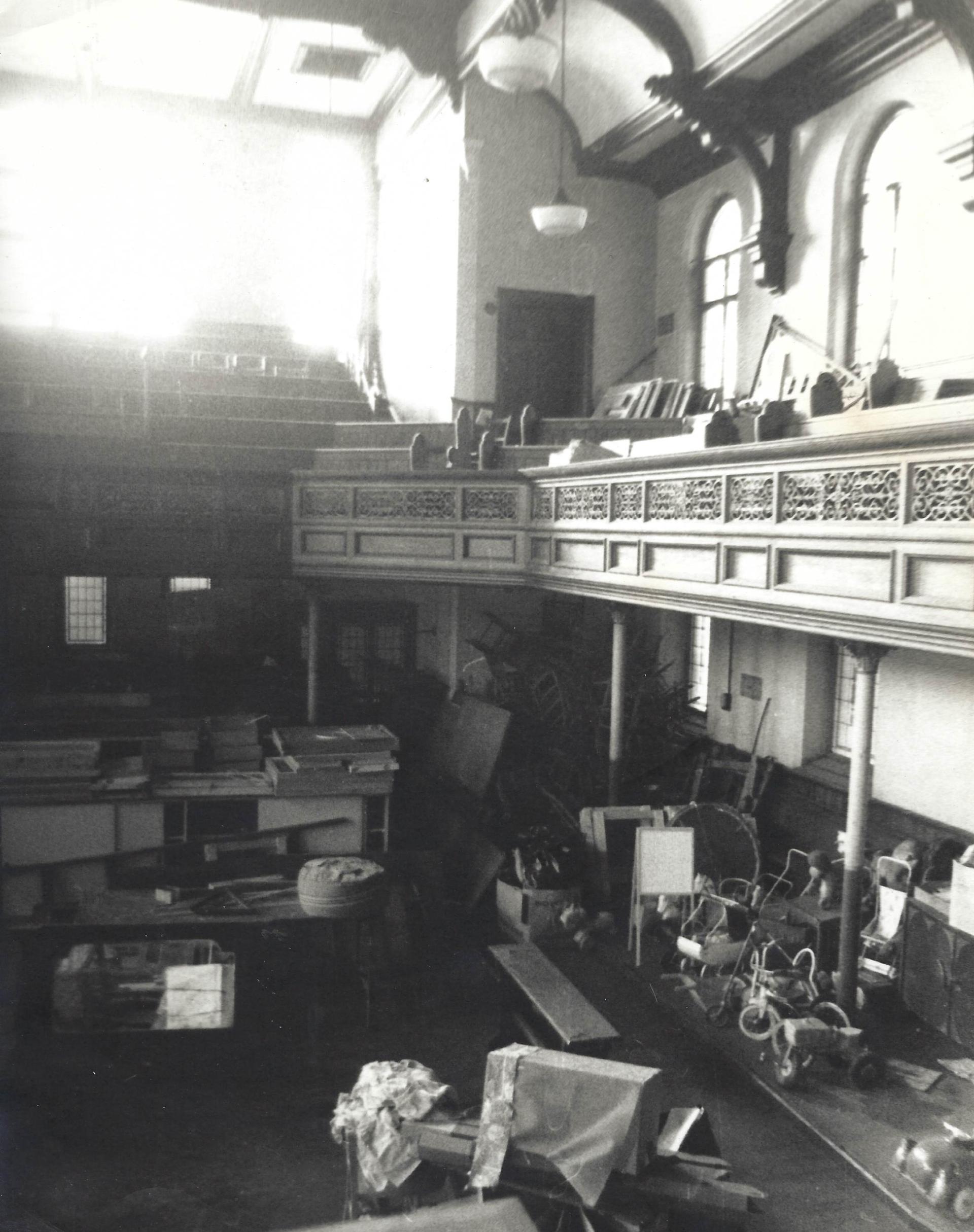
We fought our way into the old church and climbed over mountains of rubbish that covered the pews where generations of worshippers had sat in happier times. We climbed up into the pulpit, with a large organ loft area centrally behind us (the organ itself was obviously broken) and we looked up at the tiers of pews in the back and side galleries, trying to recapture the scene of ‘what had been’ in order to give us a glimpse of ‘what could be’ in the future.
Treasure Hunt
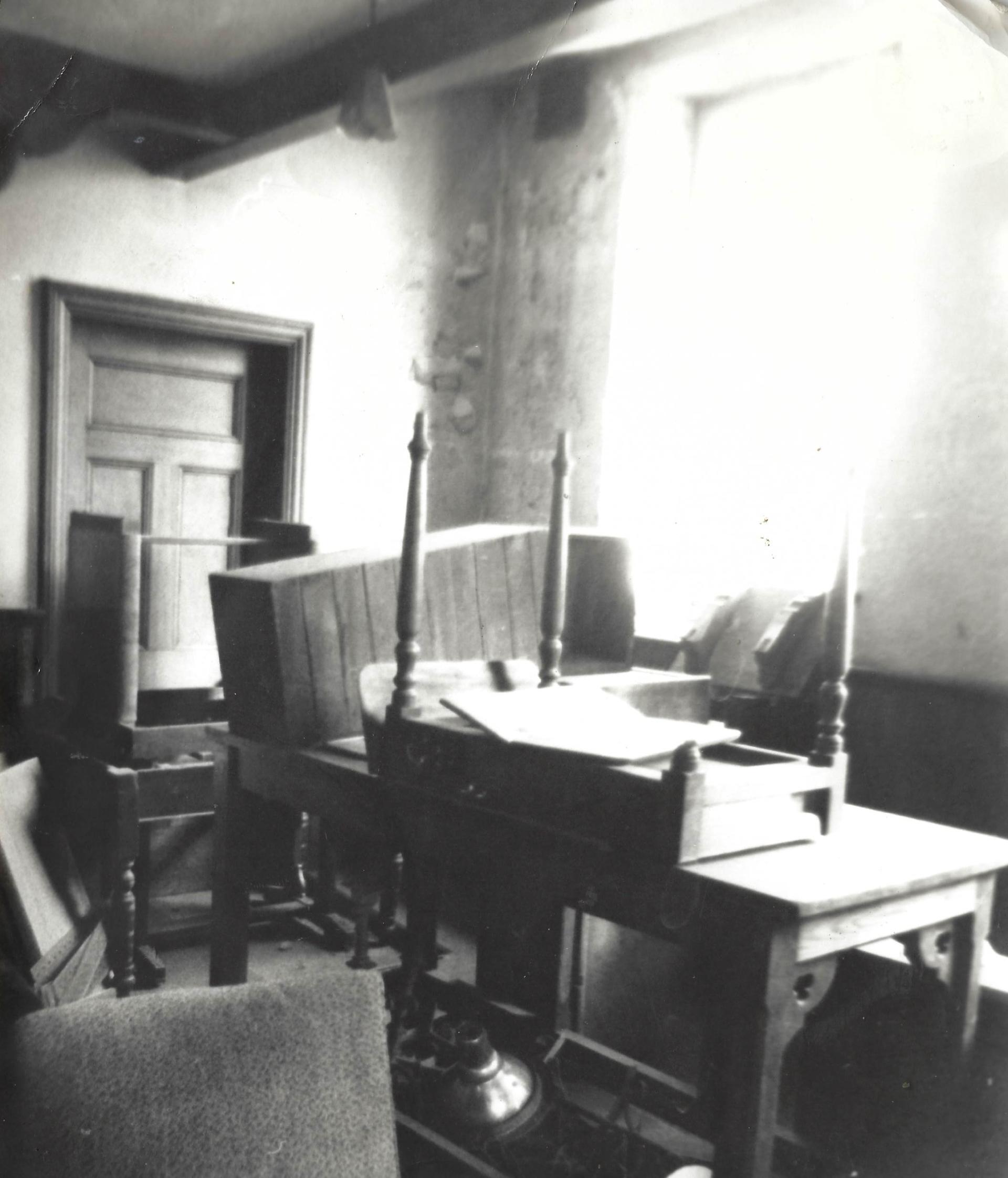
We then went into a back room, off the corridor behind the pulpit, that clearly at one time had been used as the Minister’s vestry. It had a small toilet off the room which again was full of rubbish and dirt. The only large item of furniture was a big old iron safe. We wondered if it was possible to see inside the safe and we began trying all the keys in the big bunch that had been given to us. Eventually one of the keys fitted and we all suddenly became interested, crowding closer to watch, and listening if the key would actually turn, and we could see what of value was inside. It did and then, as excitement mounted, we tried turning the handle and then pulling open the door.
Everyone craned their necks in anticipation – what treasures could this great old safe contain? At last, the door creaked and swung open, and at last revealed its contents – just one item – the great old pulpit Bible – a relic from the past! We all stood there speechless, each with our own thoughts. Here was the word of God shut up in a safe – a parable of probable neglect, and a demonstration of the growing godless values that had brought this old church building to such a state as this, where the owners had given up and made the decision to demolish the buildings to make way for houses or flats.
We discovered later that when the Moravian Church on neighbouring Plashet Grove, had run into similar difficulties with their building with only a dwindling membership, their building had been sold off, and the minister who at that time lived next door to the Harold Road Centre, had thrown his weight in with the Methodists and the Methodist/ Moravian congregation had been born only a few years ago in the late 1960s. There were still some links but the worshipping congregation had not grown sufficiently and was reduced to low numbers: two attempts, with specific schemes, had been made to demolish the building and use the space for housing, the second had been successful which would mean that not only would the church but also the community facilities be lost as everything would be demolished and replaced with a block of flats. On this occasion, when approached by Rowland Joiner, a fellow-Methodist and Cliff's colleague, the national authorities did take note, reversed the decision and handed the responsibility to negotiate with us to the local Circuit who pulled out all the stops to assist us. This was obviously God's will and we were meant to save the buildings from destruction and resurrect it in some way for new life in serving the community.
Negotiations
Unlike negotiations for Trinity, progress was made very quickly and smoothly. We were immediately offered a 25-year lease, during which time we would have complete freedom over the contents and buildings with no restrictions on worship and also permission to develop it as we wished. As there was no record of any activity in any of the buildings for the last two or three years, we could take it over as soon as we were ready. No rent was expected by the Methodists, whose Trustee department would retain ownership of the premises, so the Renewal Programme took full responsibility from August 1974. It probably was not true to say that ‘nothing had been happening’ as there were many around still with fond memories – but more about that later.
Personnel
I automatically became the Project Leader to get it off the ground while overseeing and enabling the continuing smooth running of the Trinity Centre. This time, having proved the need and effectiveness of our community development principles at Trinity, there was no shortage of team members wanting to have a share and participate in this new venture and this was helped by the services of the increasing number of young people from outside the area coming to join the NCRP to live and train as community workers who were keen to be practically involved.
Dave Wiseman, one of the earliest intake of TCWs from outside the area in September 1974, had been trained at Birmingham Bible Institute but he also had DIY and carpentry skills,. and he was deputed to assist in the first year. He joined us having just got married and he and his wife found accommodation at St Bart’s Fellowship House and did a great job there as well as at Harold Road. Greg Smith was considering becoming a TCW and when Dave moved on at the end of his year, he continued to give some time while also concentrating on Asian work. Jon (Jonathon) Baston was officially appointed in 1976 while also helping in Beckton; Greg, by that time, was carrying out a great deal of research among the newly arrived Asian immigrants and had moved out of the Community House in Winter Avenue into a small flat just 100 yards from the centre where he lived from 1976-79 – so he was a natural to be fully involved in developing community there from those early days.
Potential Additional Use
Wakefield Street church was still officially our headquarters, although all the main policy-making positions like Director and Treasurer as well as secretarial help were all carried out on a voluntary basis. Any people grants we had received at this time were covering other more specific action-oriented staffing who were operating in different departments from different venues around the borough. One or two were working from Trinity and using the office there by sharing facilities with the assistant warden of the community centre. Our home in Shelley Avenue had rapidly become the weekly central community meeting point where our staff and interns met for teaching, discussions and prayer. There was equal status between the one or two paid and the unpaid as commitment was the same.
The concept that the four reasonably sized meeting rooms above the hall at Harold Road might have even wider significance for the NCRP was always in the background. It could surely be a God-given natural place for a potential central coordinating base to bring together the admin sections of the Renewal Programme for the currently separate departments as it was seen to be a fairly central location. But we were very conscious that this was not to be the prime purpose for which the buildings had been donated and if the rooms were needed for any community activity, this would automatically take precedence.
We agreed also that there was no rush to try to further coordinate the departments or gather all the administrative areas together in one place. Our senior staff were still all voluntary with no central paid administrator and we owned little furniture and fittings: the structure needed was operating reasonably effectively from different sites, supported by the local churches and having no specific buildings responsibility for the NCRP. And by involving so many wide-ranging churches, we also had access to using the most appropriate facilities at the right time in various parts of the Borough. We did not want to divert people from other projects to this site, so the priority was to draw the LOCAL community in as soon as possible to help them feel valued and to give them a sense of ownership and worth.
Initial Actions
Our first port of call, was, of course to go back to see Mrs Fisher, to report to her the outcome of our visit and negotiations and to try to understand the background of how the people who had previously been involved had reached this stage. We could also learn more of the history of this potential amazing resource of which we were becoming stewards for the foreseeable future.
It was August and the holiday season as well as being in the early stages of our new experiment in taking on TCWs: who were all young people who had committed themselves to giving one, or two, years of voluntary service with us, and I from the beginning had been involved in any interviewing procedure1 not only for those coming in from outside but also for local volunteers, so I was also the one carrying the responsibility for developing a full training programme for them. September was often seen as the start of a new year both in the church and in the educational system. So, we saw the month of August as a month of preparation, thinking and planning.
Help from Mrs Fisher
As expected, Mrs Fisher2 was excited by the whole project and rapidly became of great importance and not just the ‘holder of the keys’ – she wanted to become fully involved. She gave us so many insights and understanding as she had lived there for most of her life and been an active member of both area and church – we could not have found anyone better to start with! She knew everyone in the neighbourhood, and she gave us a number of contacts as well as much information on the history of the church. She even remembered the days when the church was obviously thriving when the hall was first built in the 1950s with War Damage money, and what an asset it had proved to be. This was also at the time when the church had other continuing structural problems and the reducing fellowship had very different needs.
Everything then began to come together very quickly, and we signed an agreement with the Methodist owners just two months later in September 1974. This was a very important year when events proceeded at an increasing pace which we will look at in the next chapter.
- 1. .The team were always keen to have me on the interviewing panel as thy said I had the gift of ‘sus’ and could spot those who were wanting to join us for the wrong reasons! This developed into helping others to identify the specific gifts they had to offer and their potential for any future role.
- 2. We only learnt Mrs Fisher’s Christian name ‘Mary’ after we had left. But we never would have used it - she was not from that culture, and we respected that – it was not necessary for her to change in that way.